
Denim Fabric Weight Guide: 6 oz to 16 oz+
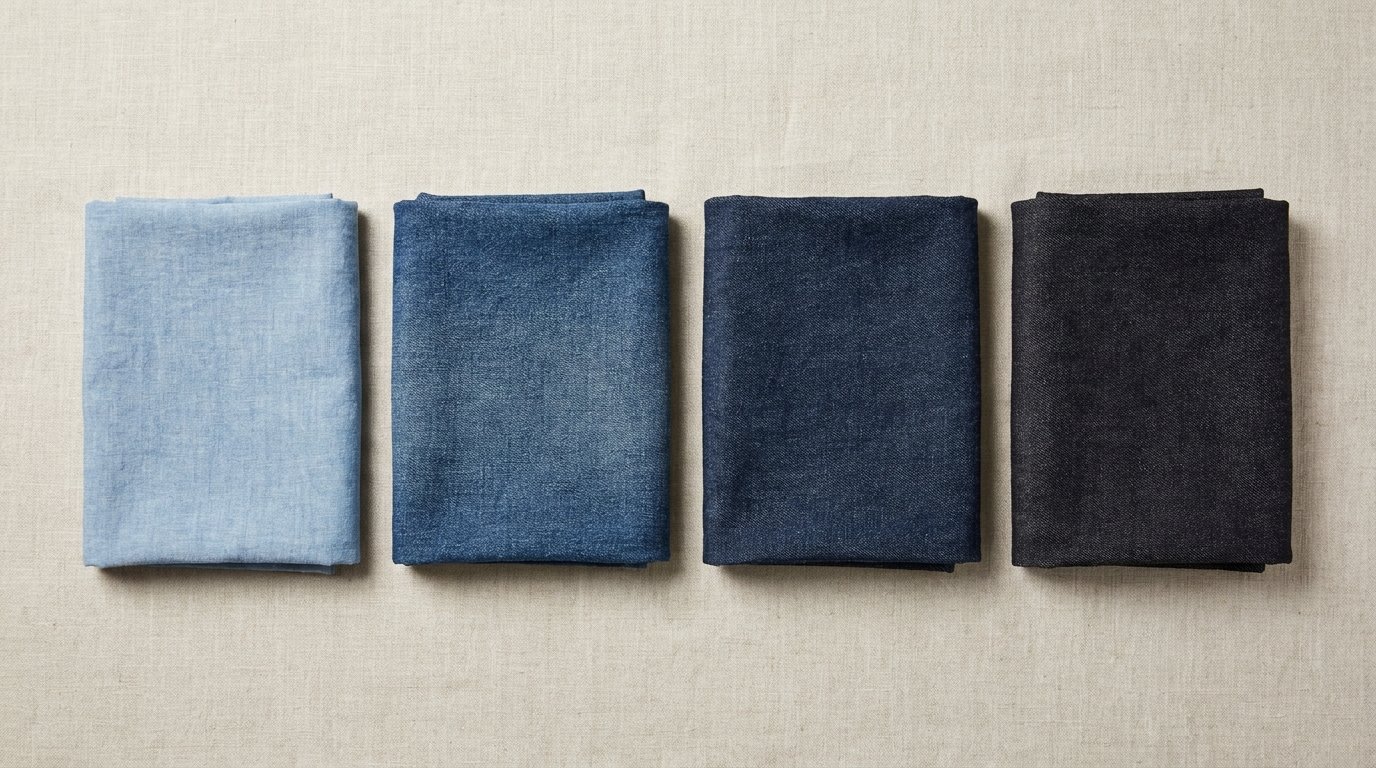
What ounce weight actually measures, what each band is used for, and why two fabrics of the same weight can feel nothing alike.
What "ounce weight" means
Denim weight is the mass of one square yard of fabric, in ounces. A 12oz denim weighs twelve ounces per square yard. That is the whole definition — and it is why it tells you less than people assume.
Weight says nothing about yarn count, twill construction, finish or hand. A 12oz open-end denim and a 12oz ring-spun slub weigh the same and behave completely differently. Weight narrows the field; the swatch decides.
The bands, and what they are for
| Weight | Typical use |
|---|---|
| 5–8 oz | Shirts, dresses, lightweight summer pieces, chambray |
| 9–11 oz | Fashion jeans, stretch jeans, skirts, shorts |
| 12–14 oz | Traditional jeans, trucker jackets, workwear |
| 14 oz+ | Heavy and raw jeans, heritage product, rugged workwear |
What weight changes in production
Heavier denim is slower to sew, harder on needles and bulkier where seams intersect. If you move a pattern from 11oz to 14oz without telling your factory, you will hear about it at the felled seam and the waistband join. Lighter denim cuts and sews faster but shows every fault in the make.
Weight also drives drape. The same skirt block in 8oz and 13oz produces two different garments.
A practical way to choose
Start from the garment, not the number. Decide the silhouette and how it should hang, pick the band, then judge candidates on hand rather than on the ounce figure. If two fabrics in the band feel different, that difference is the yarn and the finish — which is exactly what you are choosing between.
Now Find the Fabric
Each of these shows what is in stock today, read live from our warehouse sheets.
Still Not Sure?
Tell us what you are making and we will point you at the right construction and weight.