
Stretch vs Rigid Denim
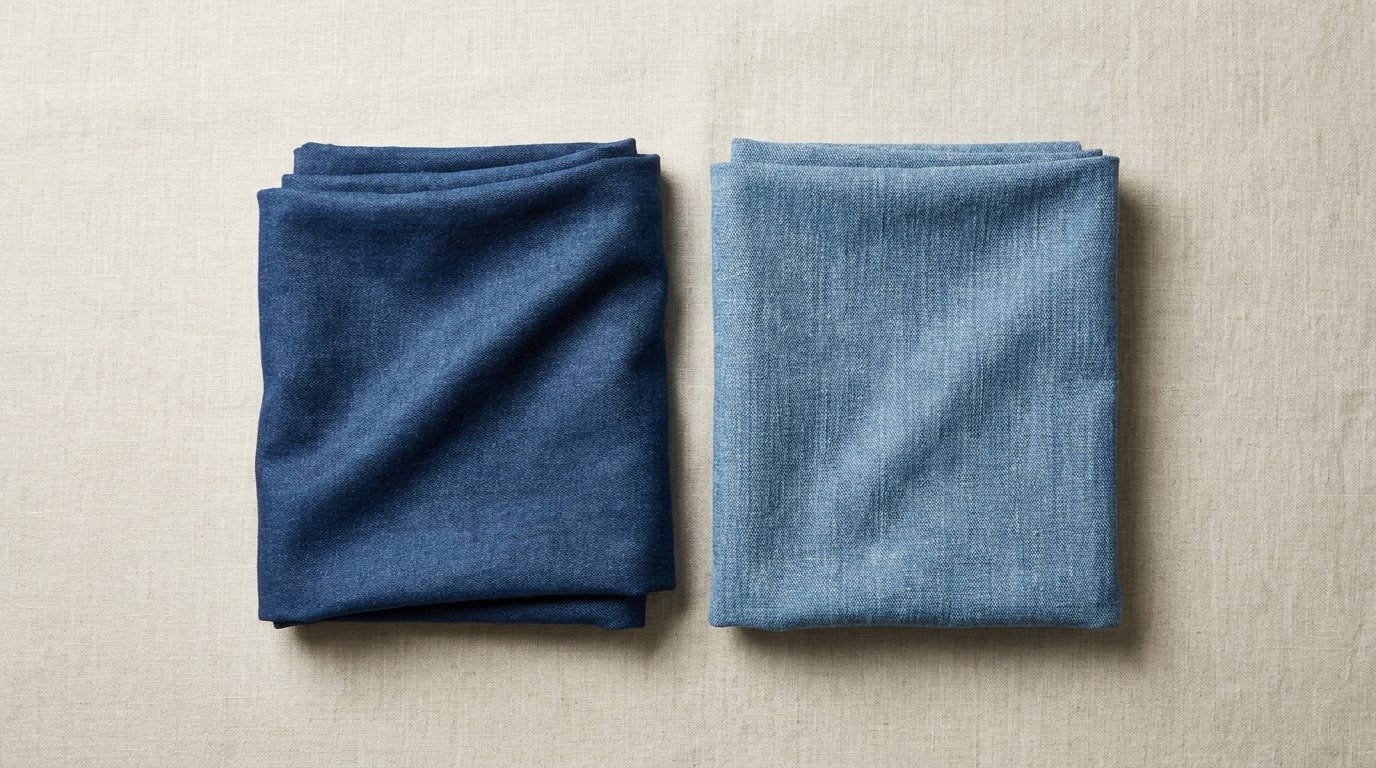
Which to choose for a given fit, what the elastane percentage actually changes, and what to test on the swatch.
The difference in one line
Rigid denim has no elastane and does not give. Stretch denim adds a small percentage — in practice between half a percent and four — and does. Everything else follows from that.
Rigid is usually 100% cotton, but not always: plenty of stretch goods are cotton blended with polyester or a cellulosic before any elastane is added, which changes drape, dye and recovery on top of whatever the elastane does.
Match it to the fit, not to fashion
Fitted and skinny legs need stretch: without it the wearer cannot sit down, and the pattern has to be cut so loose that the fit is lost. Straight, relaxed and wide legs are better rigid — stretch in a loose fit bags at the knee and seat within a day, because there is not enough tension to make the recovery work.
Jackets are almost always rigid. A trucker relies on structure across the shoulder and chest, and elastane works against that.
98/2 versus 99/1, and what sits either side
These are the two constructions you will see most, and by a wide margin: across our own stretch inventory, 2% and 1% account for roughly five rows in six. The 2% goods are what most fitted programmes are cut in. The 1% goods behave much closer to rigid — enough give for comfort, not enough to change the silhouette — and they suit a straighter leg, or a customer who wants the look of raw denim with some ease.
There is useful ground either side of that. Half a percent to one and a half gives a rigid hand with just enough recovery to stop a knee bagging. Three to four percent is where a genuinely close fit lives, and it is a real category rather than an oddity — we carry it. Above four you are into power stretch and jegging territory, which is a different fabric with different pattern rules; ask us rather than assuming.
The percentage is not the whole story. A 2% cotton-elastane and a 2% cotton-polyester-elastane behave differently: the polyester changes recovery and how the fabric takes a wash. Check the full composition, not just the elastane figure.
What to test on the swatch
Pull it across the weft and hold for a few seconds. A fabric that stays distorted when you let go has poor recovery and will do the same at the knee. Check whether the stretch is weft only or bi-stretch. Read the whole composition, not just the elastane number — a blend with polyester or a cellulosic will drape and dye differently from a straight cotton-elastane at the same stretch percentage. And wash a piece if the programme includes a wash: elastane and hot industrial laundering are not always friends.
Now Find the Fabric
Each of these shows what is in stock today, read live from our warehouse sheets.
Still Not Sure?
Tell us what you are making and we will point you at the right construction and weight.