
Selvedge Denim: What It Is and When It Is Worth It
Also spelled selvage. What the self-edge actually tells you, what it does not, and when to specify it.
What selvedge means
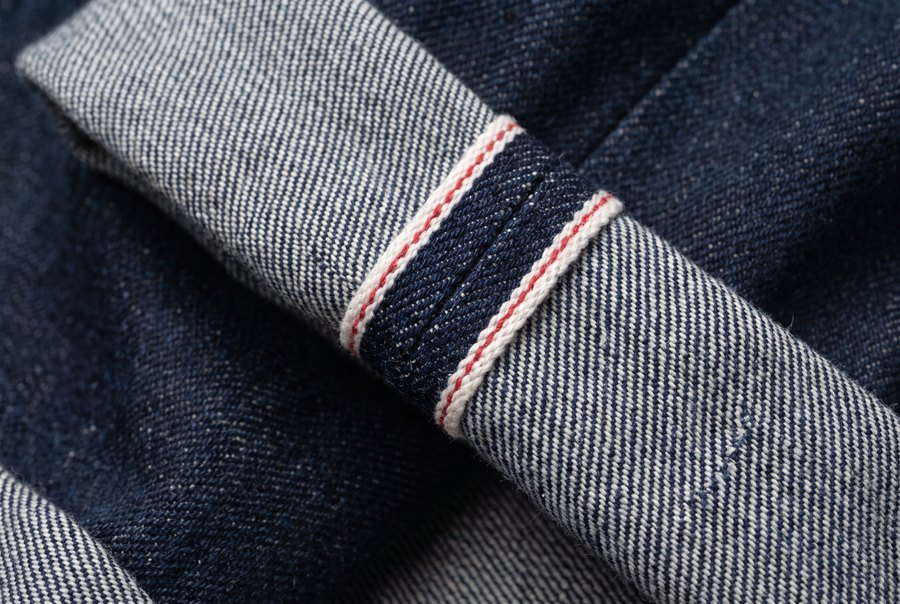
Selvedge — also spelled selvage, both are correct — is the finished self-edge produced by a shuttle loom. The weft turns back on itself at the edge instead of being cut, so the edge cannot fray and needs no overlock. That narrow band, often with a coloured line running through it, is the selvedge ID.
Shuttle looms are narrow, typically 31 to 35 inches, and slow. That is the real reason selvedge costs more: it is a production constraint, not a quality grade.
What selvedge does not tell you
Selvedge is not a synonym for quality, and not a synonym for raw. You can have poor selvedge and excellent wide-loom denim. What it does reliably indicate is a shuttle loom, which usually means slower weaving, more irregularity in the yarn and the slubbier character people associate with heritage denim.
It also affects yield. A 33 inch selvedge roll and a 60 inch wide-loom roll are not comparable per yard — work the marker before comparing prices.
When to specify it
When the selvedge ID will be visible — a cuffed hem, an exposed outseam — or when the programme is sold on heritage construction. If neither applies, wide-loom denim of the same weight and hand will usually cost less per finished garment.
Now Find the Fabric
Each of these shows what is in stock today, read live from our warehouse sheets.
Still Not Sure?
Tell us what you are making and we will point you at the right construction and weight.